Project:

Lethal Restraint
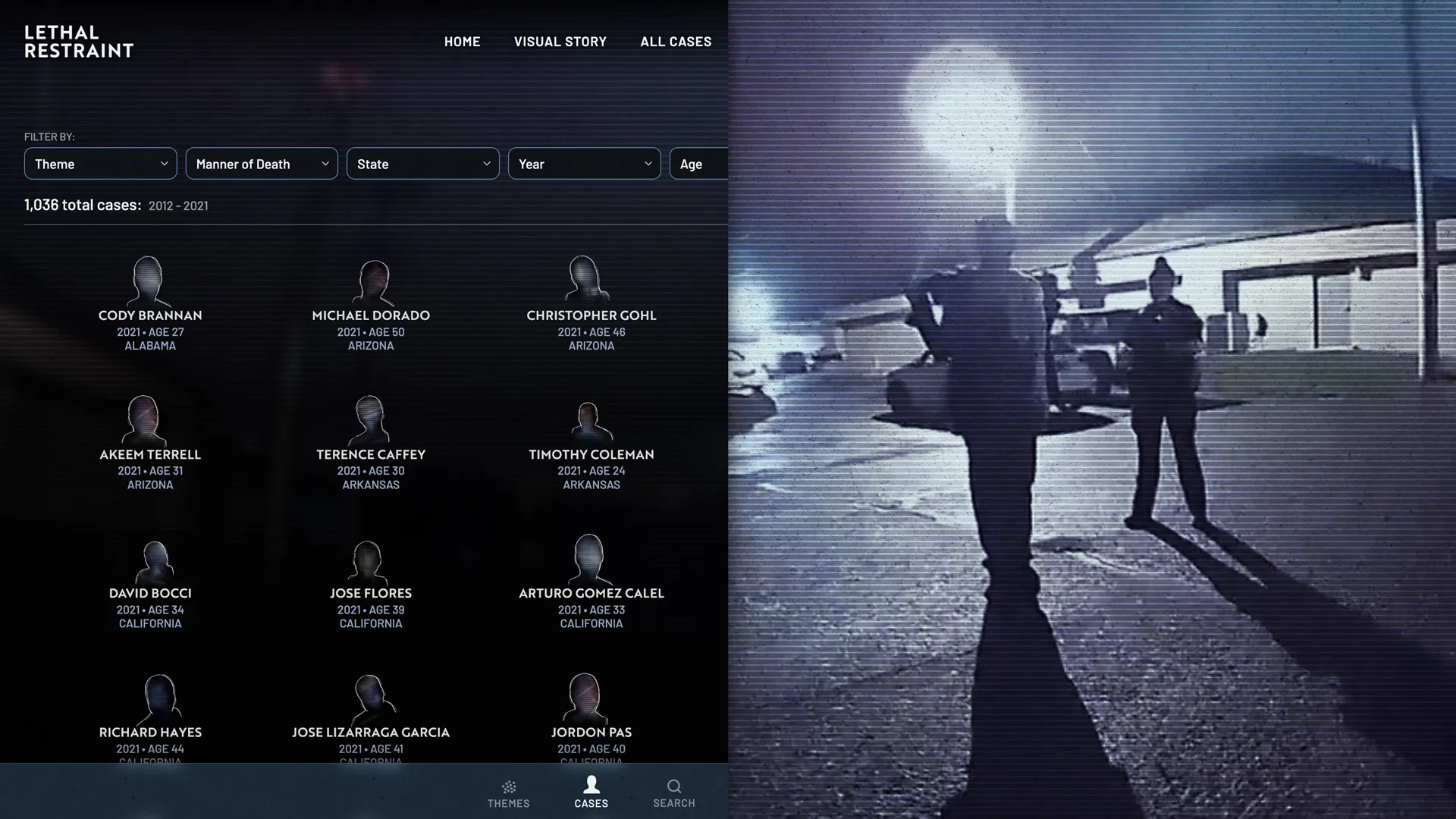
Split image showing the Lethal Restraint case database, a grid of silhouetted profiles with names, ages and states, beside a nighttime body camera still of an officer standing in a parking lot.
Year:
Filed Under:
  • interactive documentary
  • product design
  • editorial design
  • front-end development
  • interactive database
  • illustration
View live site

A Pulitzer Prize finalist, Lethal Restraint is an investigation documenting police encounters where people died after police used force meant to be safer than firearms — tactics like tasers, physical restraint and sedation.

I led the design and visual storytelling of an immersive story experience and interactive database of over a thousand cases. Some of the most difficult design challenges centered around how to integrate an interactive database into a narrative experience, how to humanize a visualization of over a thousand deaths, and how to present sensitive material and difficult subject matter throughout a narrative.
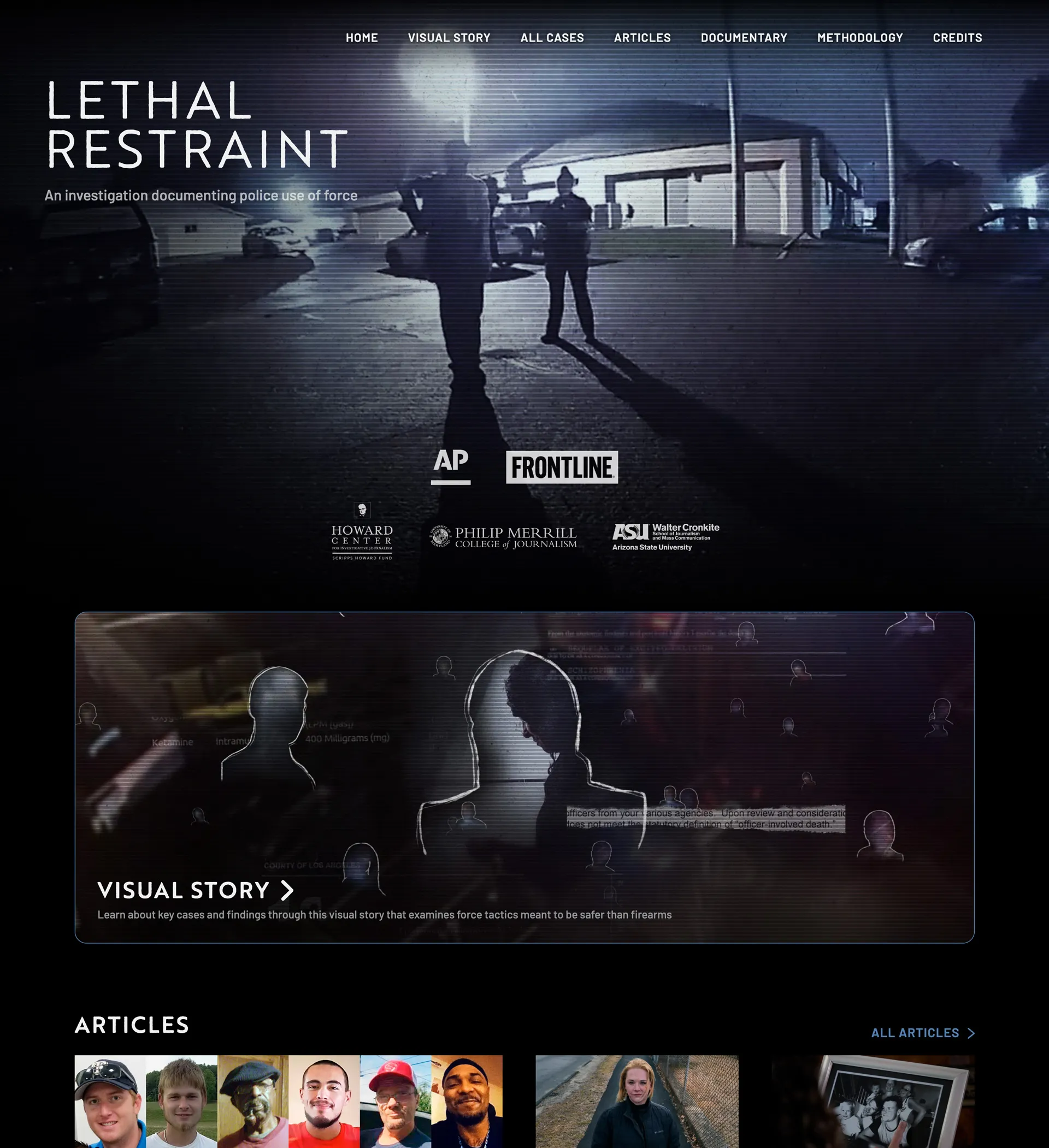
Lethal Restraint homepage with the title over a nighttime body camera still, partner logos for AP, FRONTLINE and three journalism schools, a “Visual Story” feature card and the top of an articles section.
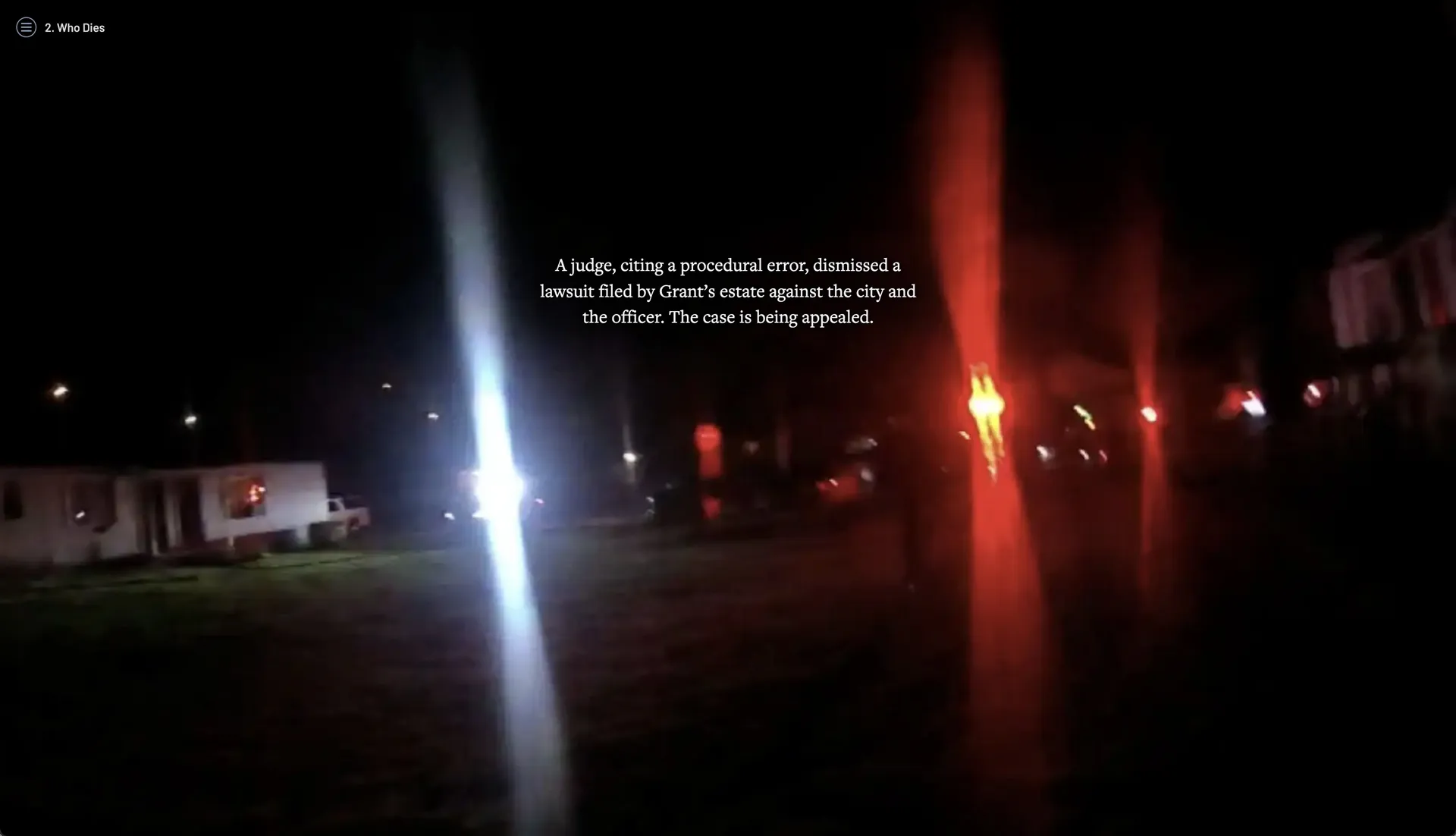
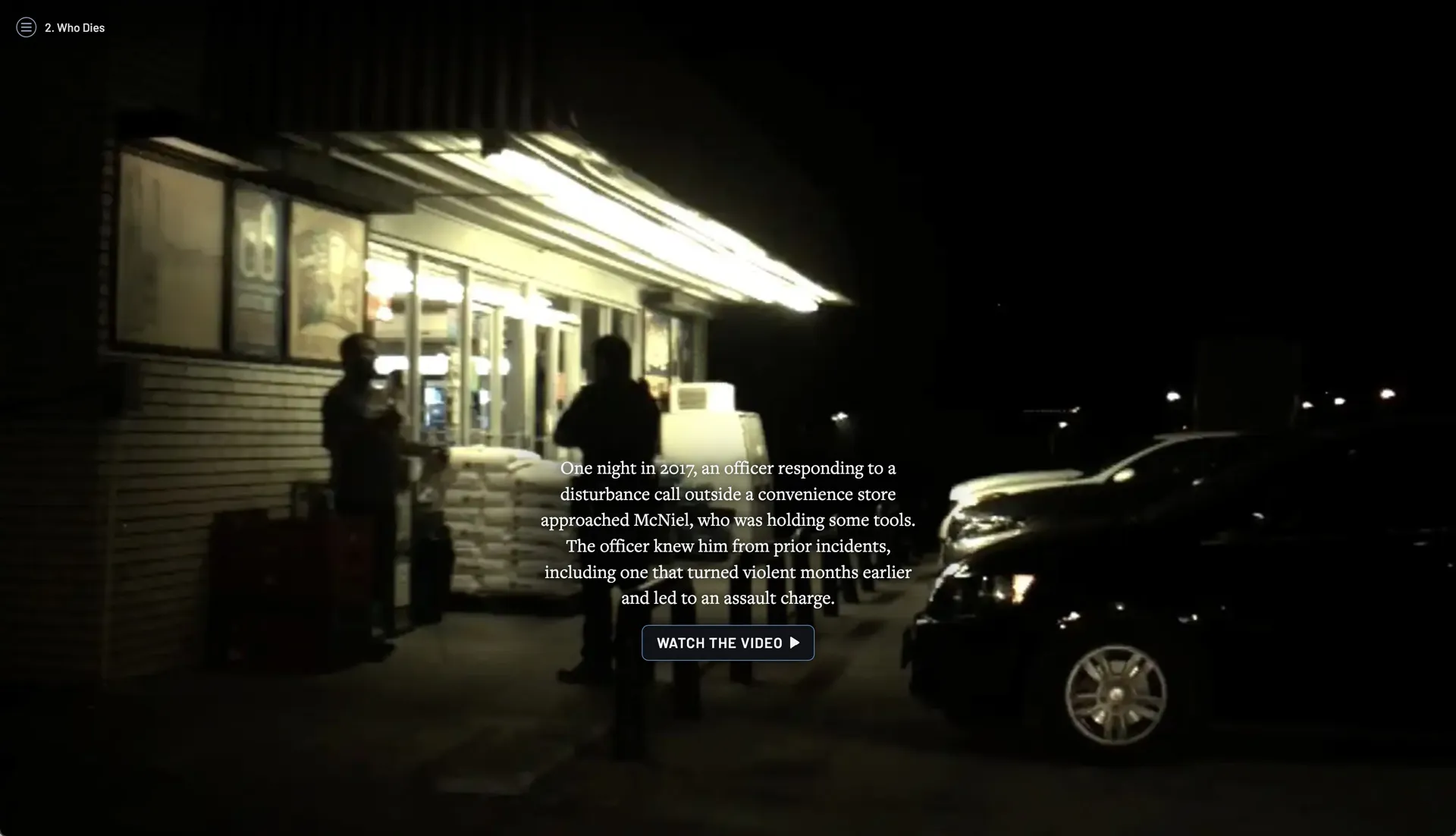
Visual story slide showing a nighttime video still of people outside a lit convenience store, with overlaid text describing an officer approaching McNiel and a “Watch the Video” button. Visual story slide showing a blurry nighttime body camera still with red and white police lights, overlaid with text about a judge dismissing a lawsuit filed by Grant's estate.
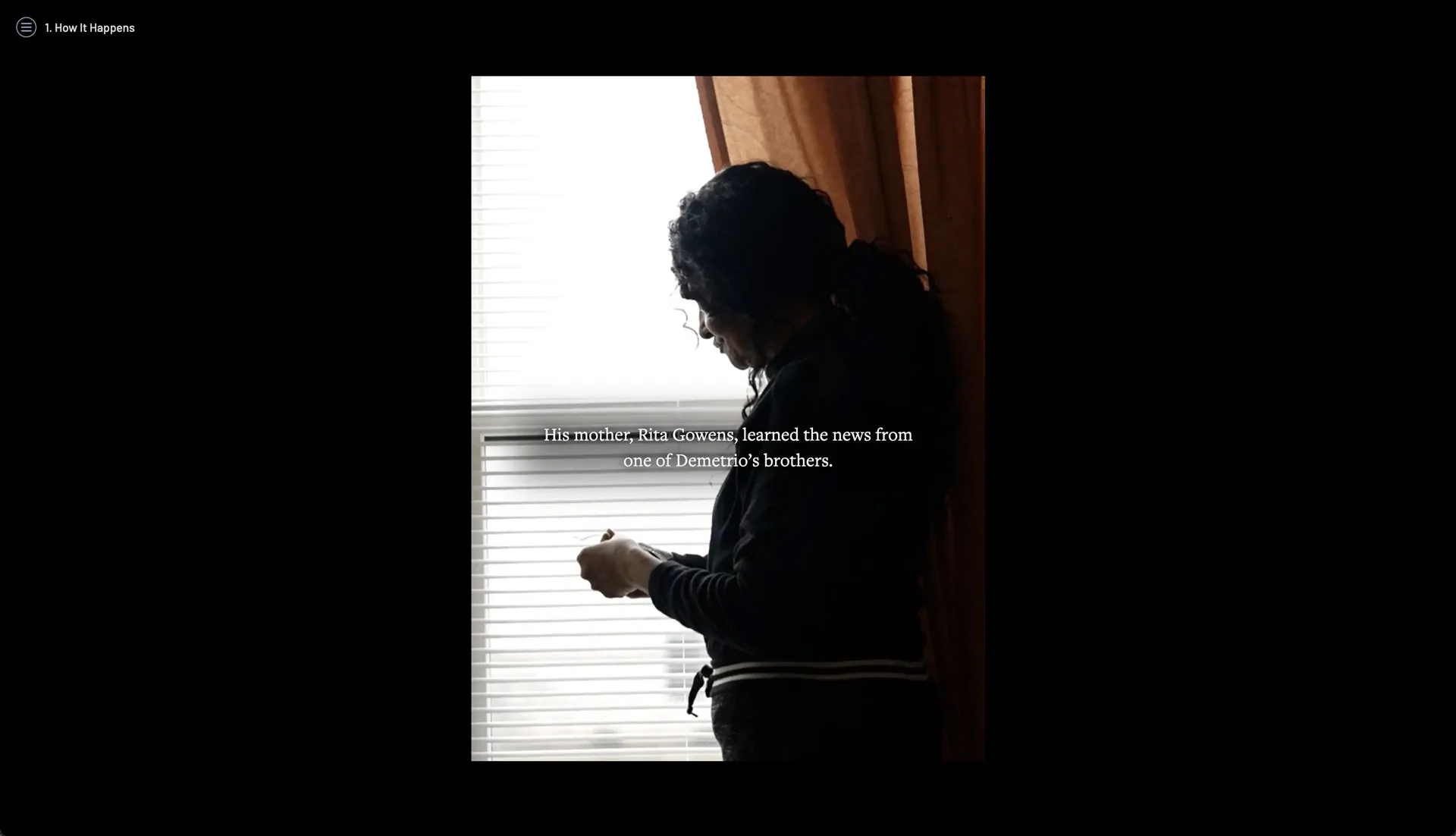
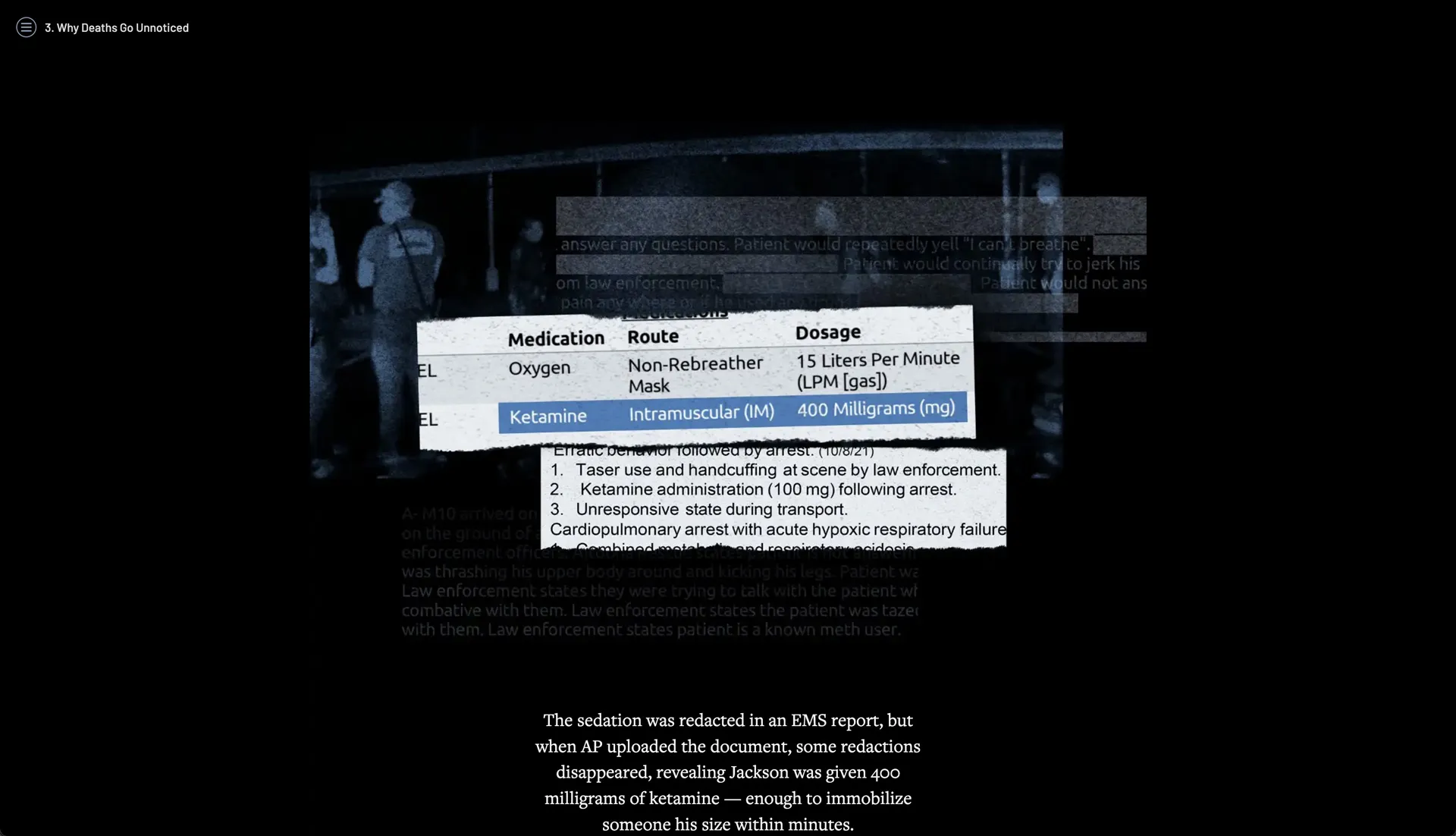
Visual story slide showing a photo of Rita Gowens silhouetted against a window, overlaid with text saying she learned the news from one of Demetrio's brothers. Visual story slide showing torn fragments of an EMS report layered over body camera footage, with a highlighted row showing 400 milligrams of ketamine given intramuscularly.
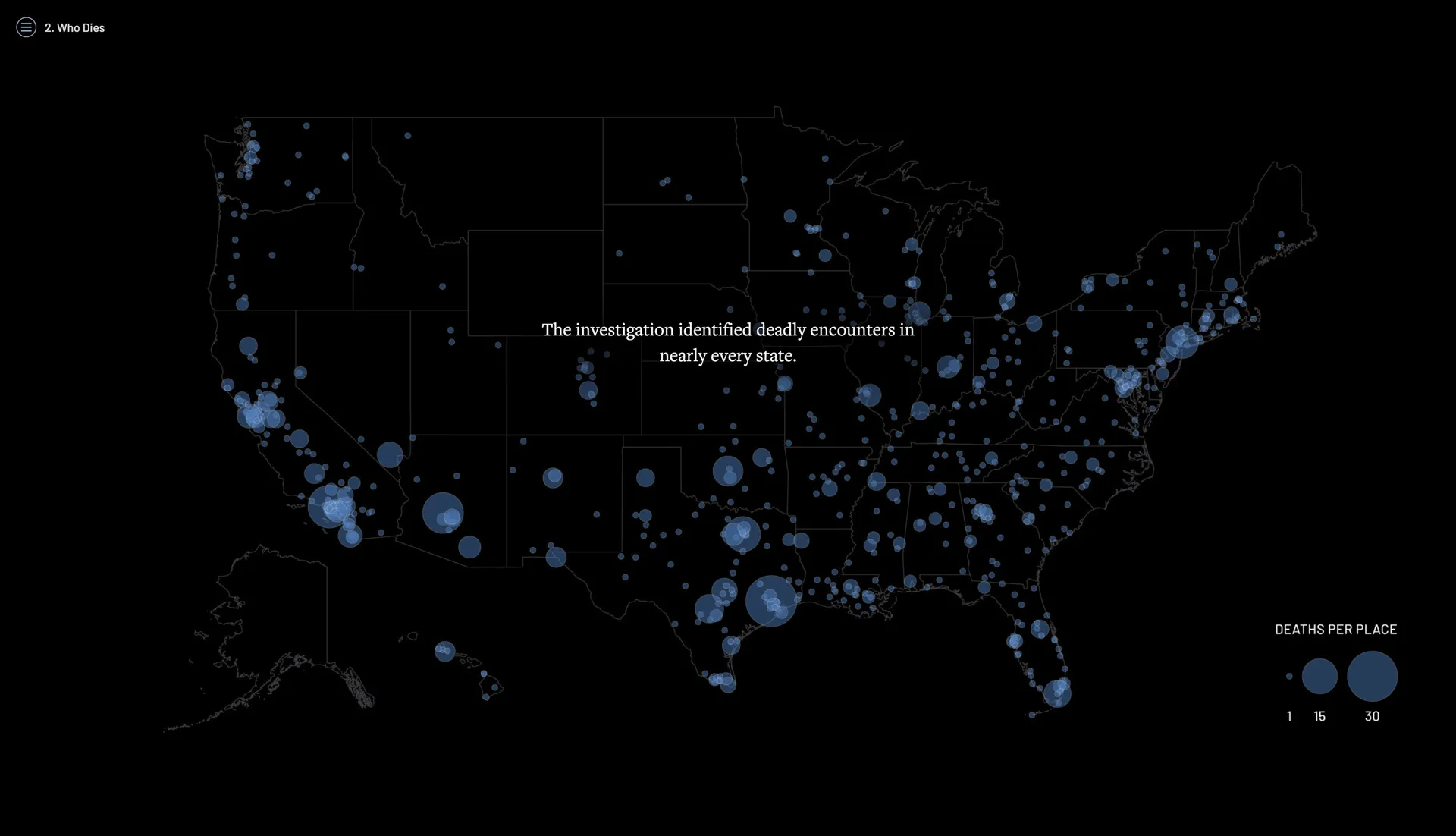
Visual story slide with a dark map of the United States covered in proportional circles showing deaths per place, with text saying deadly encounters were identified in nearly every state.
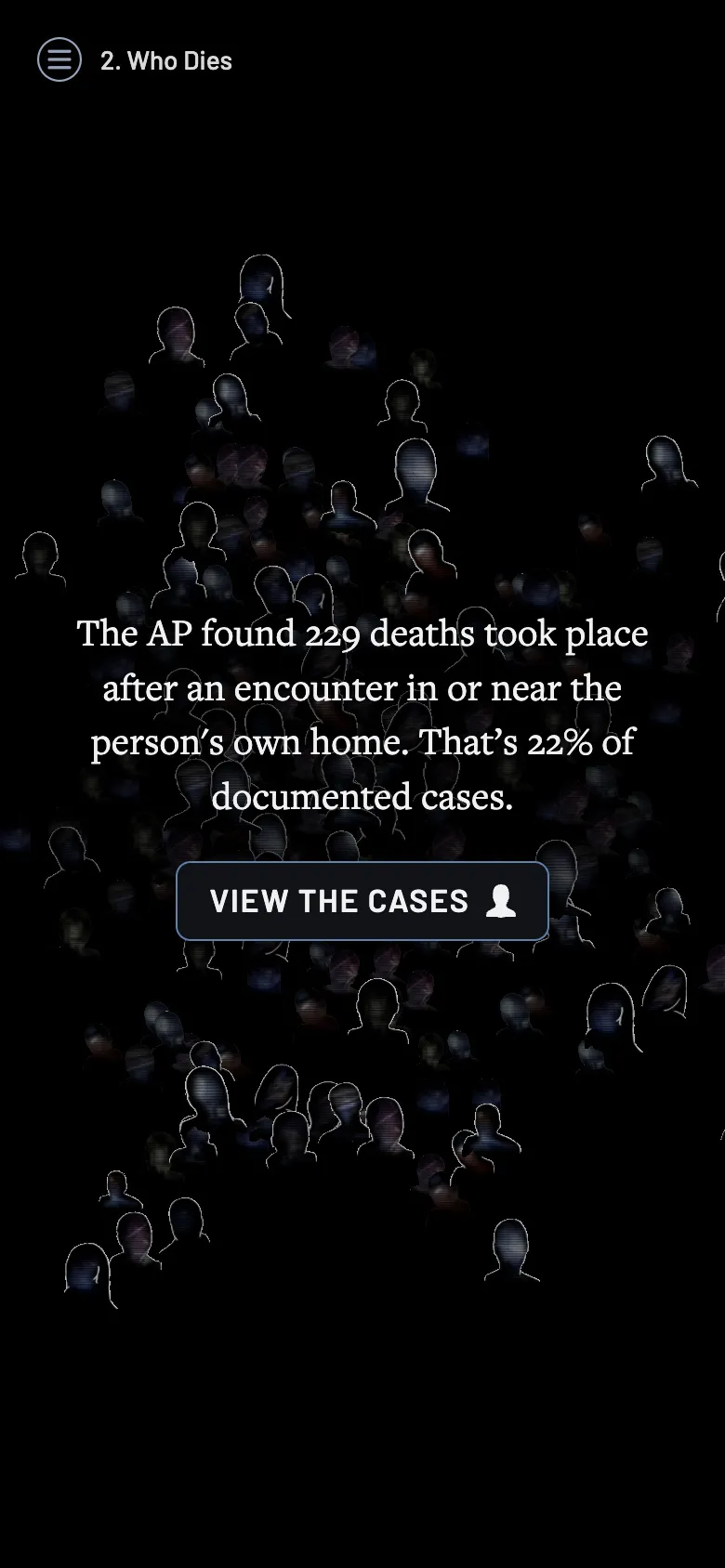
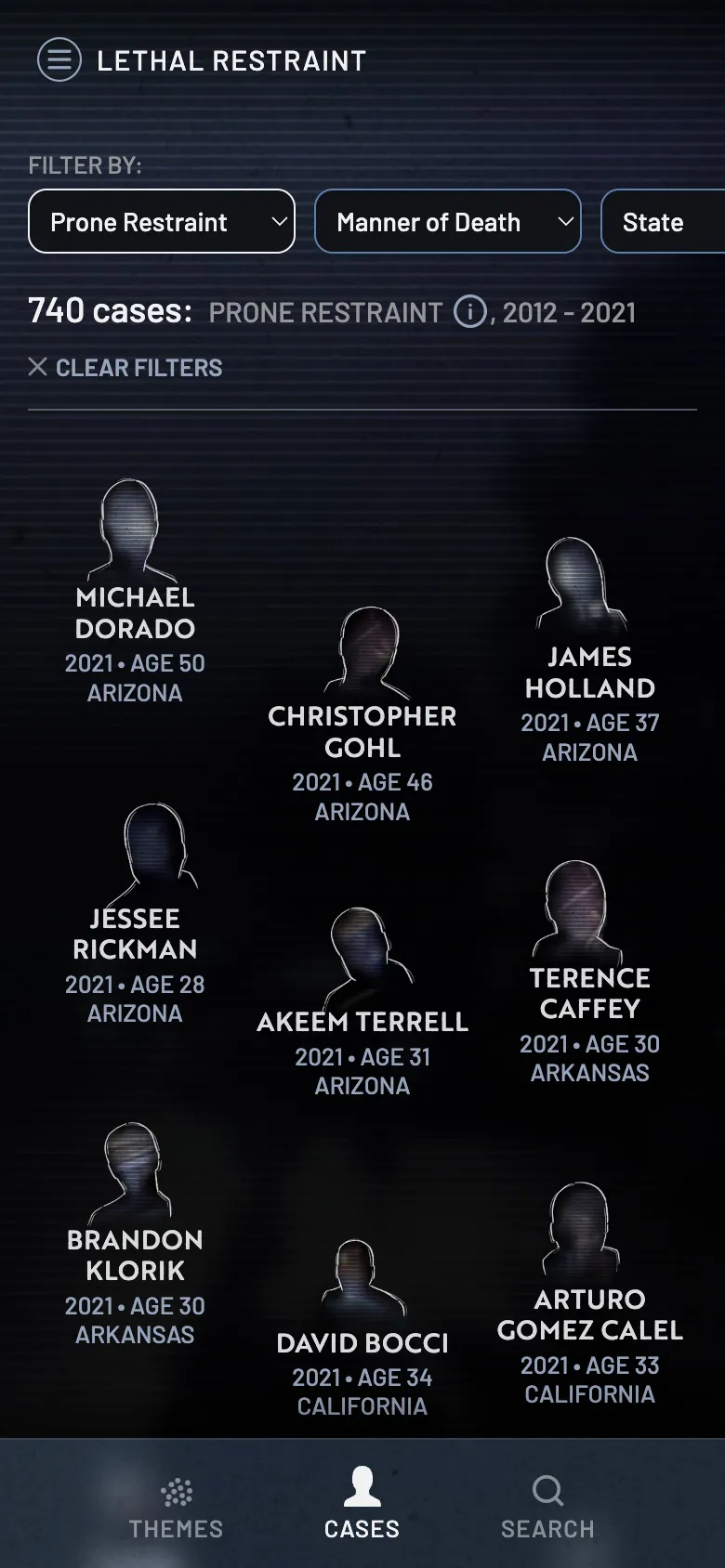
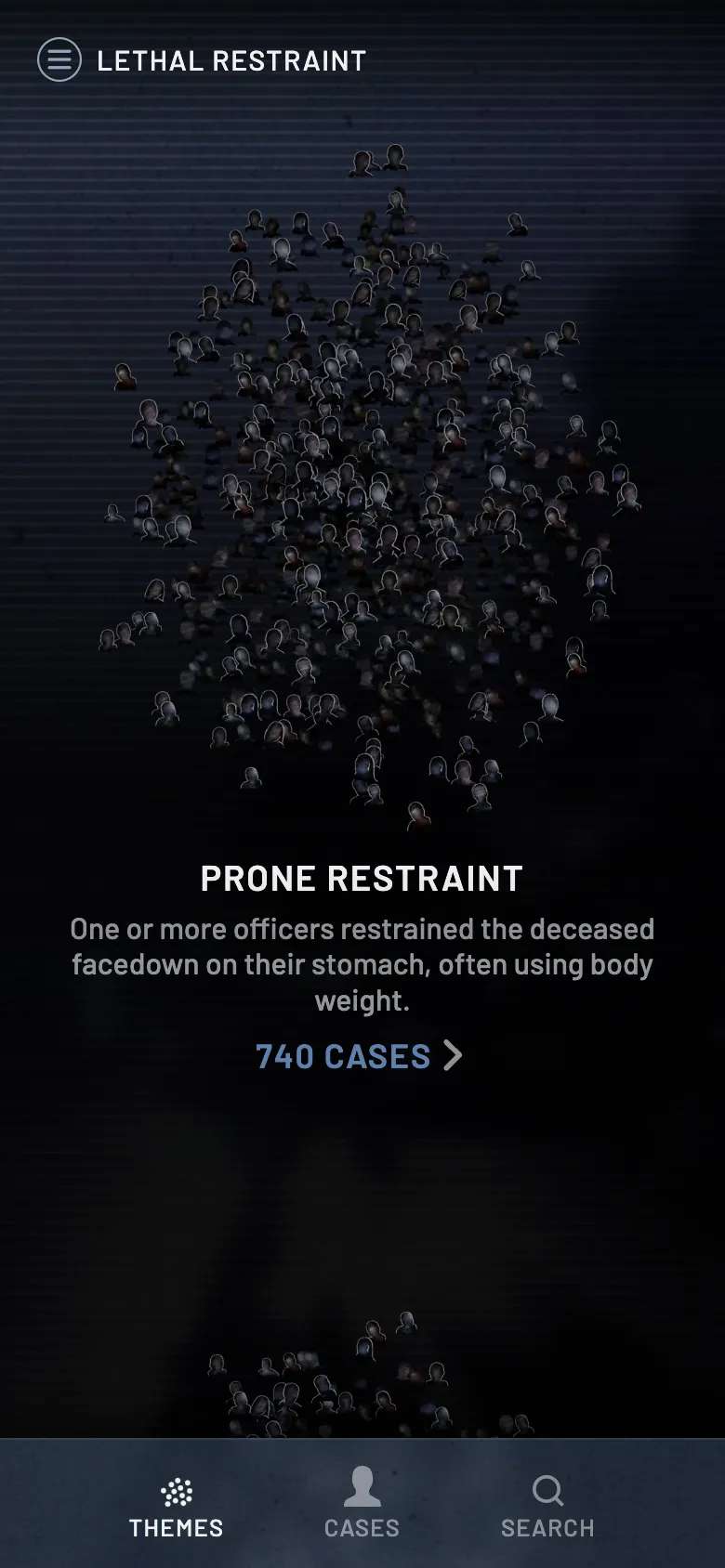
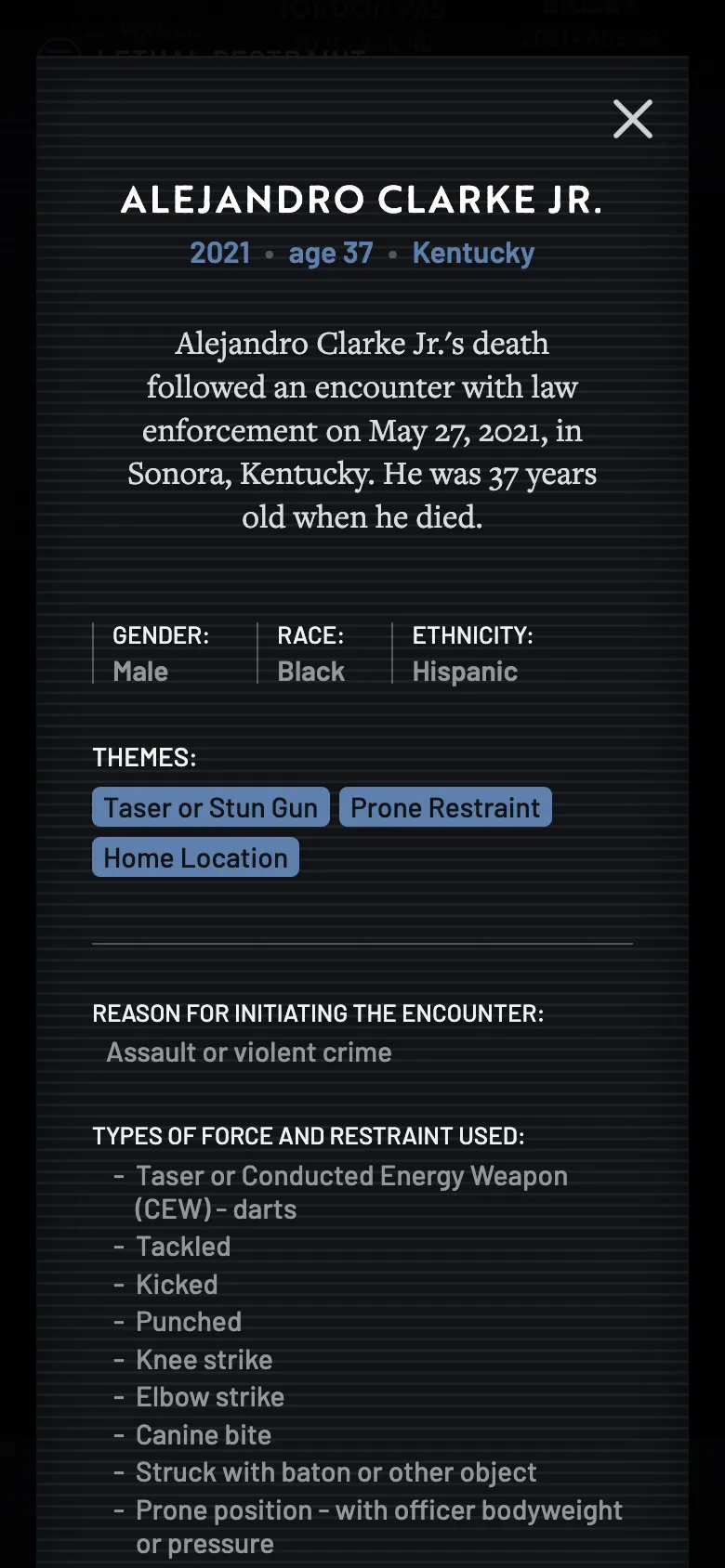
Mobile visual story screen showing a cloud of silhouetted profiles behind text saying 229 deaths happened in or near the person's own home, with a “View the Cases” button. Mobile case database filtered by prone restraint, showing 740 cases as a grid of silhouettes labeled with each person's name, year, age and state, with Themes, Cases and Search tabs at the bottom. Mobile themes view showing a cluster of silhouettes above the heading “Prone Restraint,” a short definition and a link to 740 cases. Mobile case detail for Alejandro Clarke Jr. showing a summary of his death, demographic details, theme tags and a list of the types of force and restraint used.

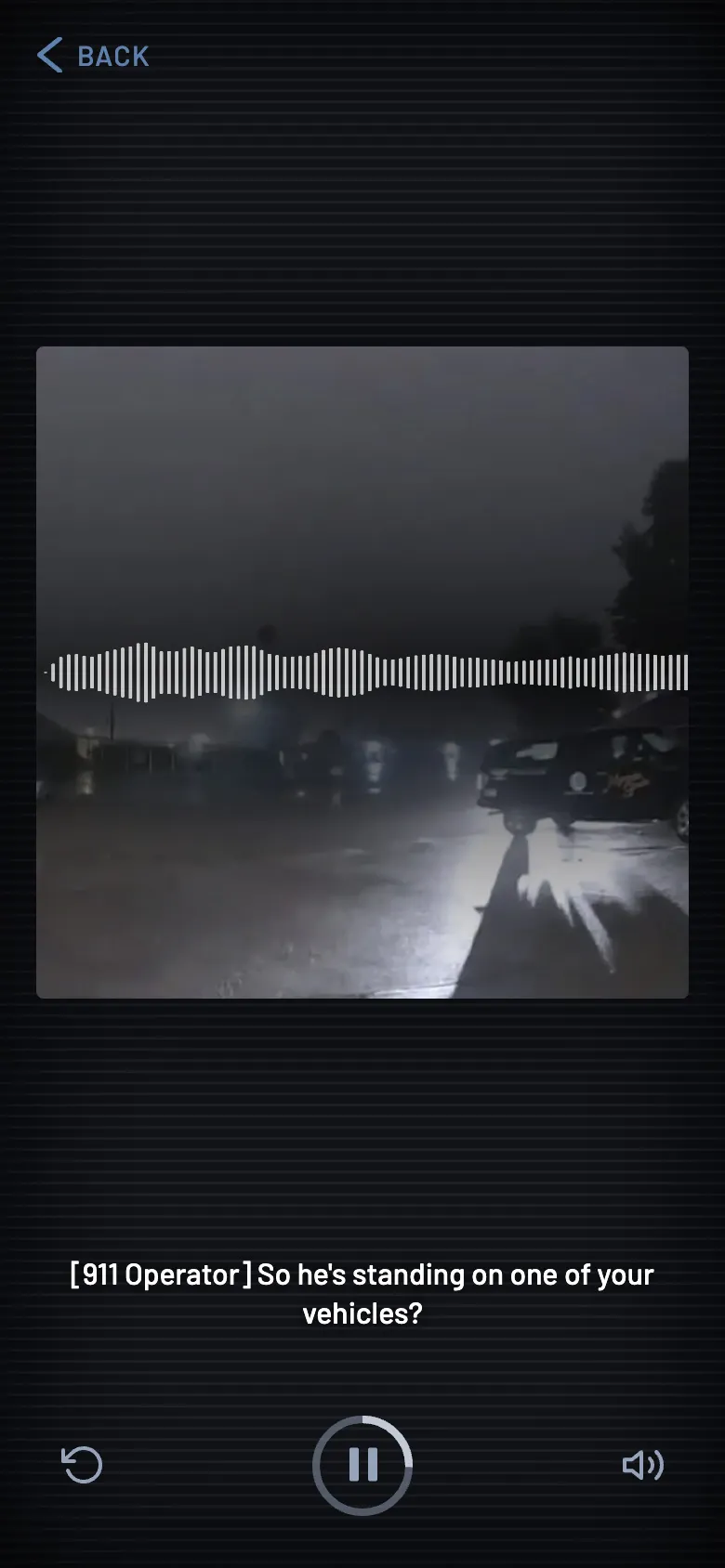
The user can opt in to hearing and viewing violent audio and video.
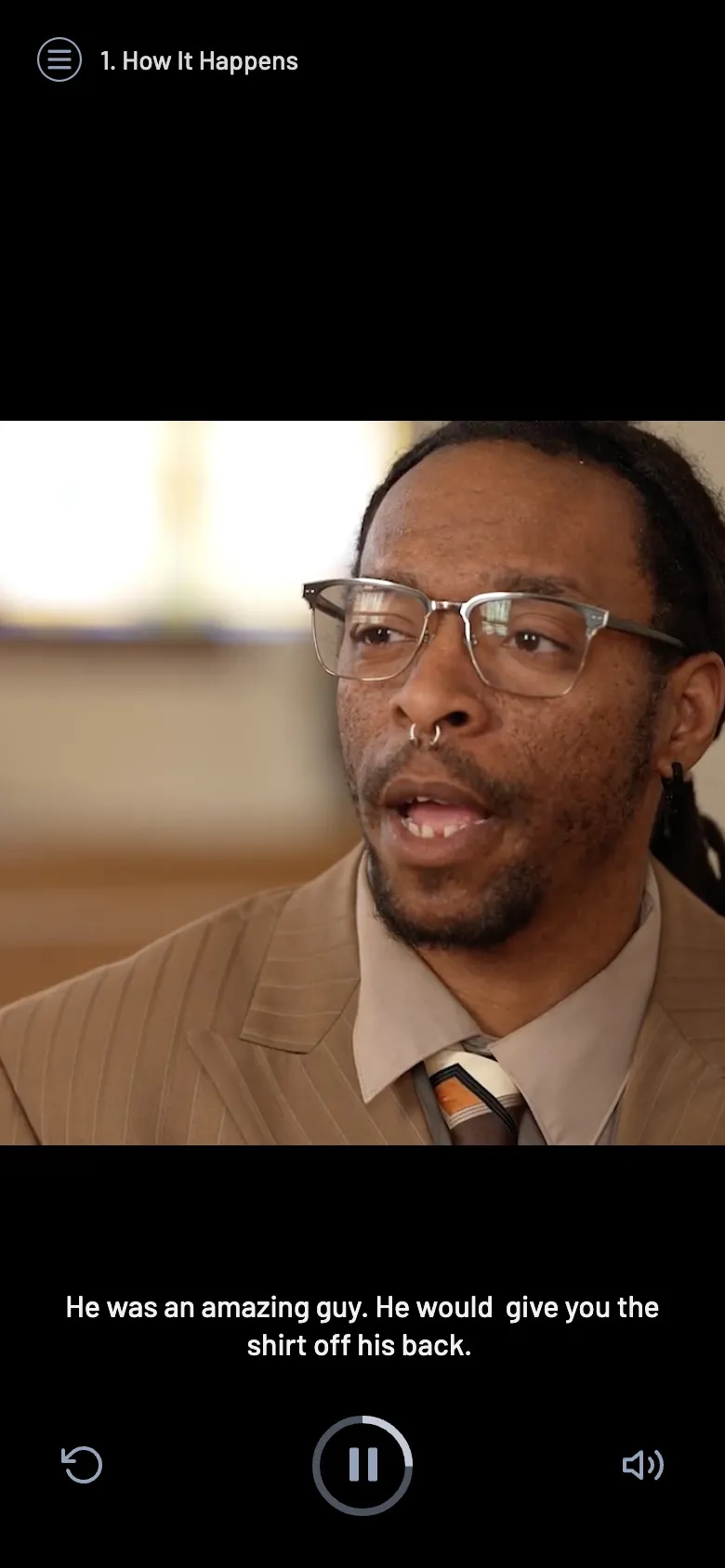
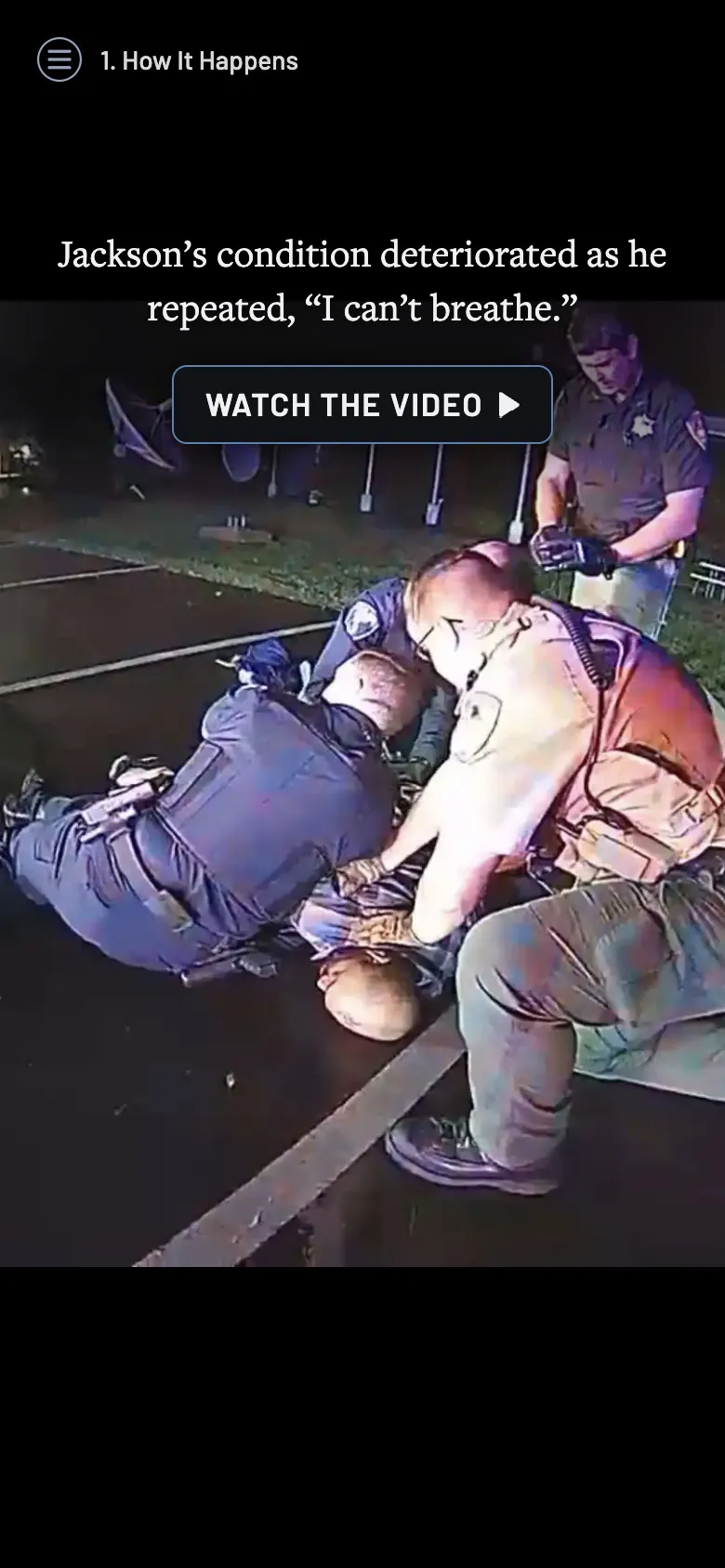
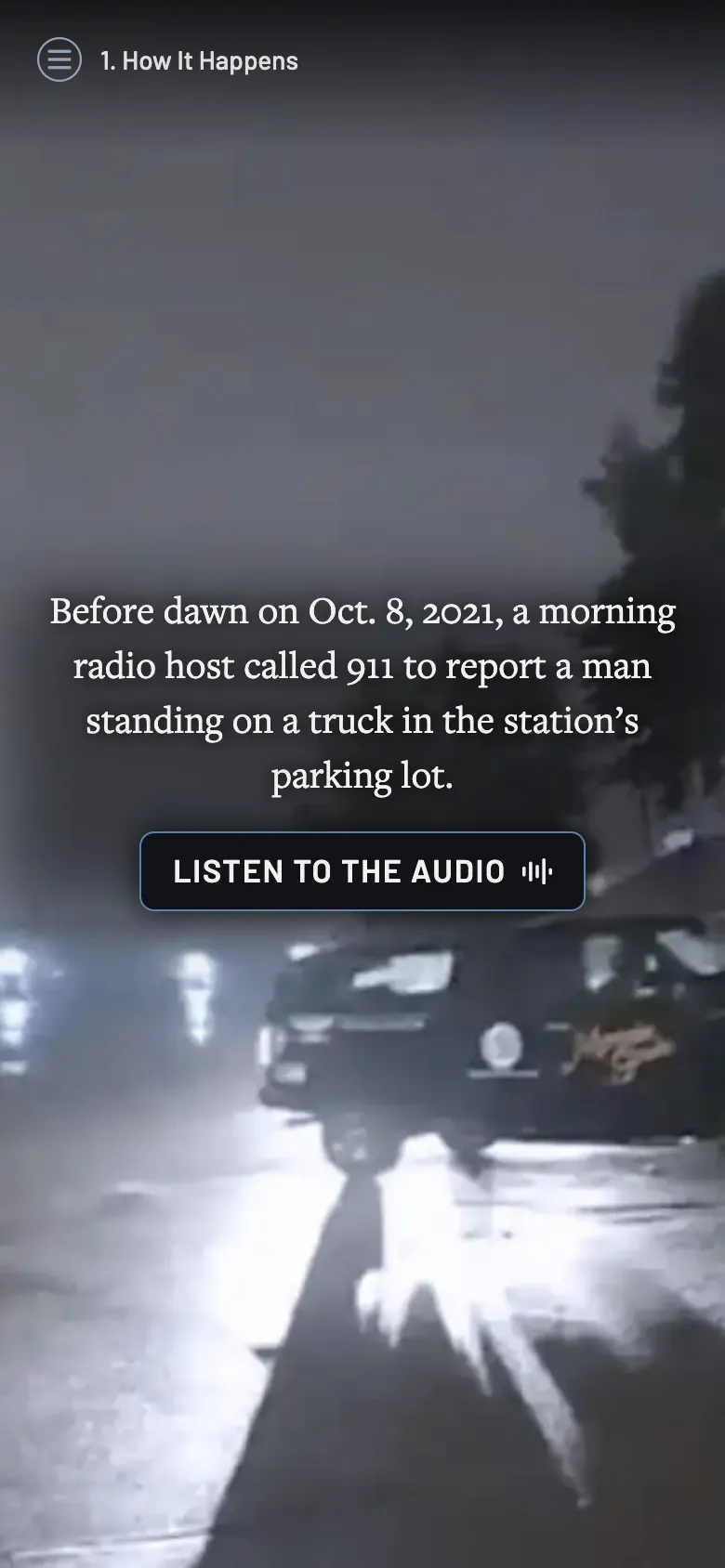
Mobile visual story screen with a video interview of a man in a tan suit and glasses, captioned “He was an amazing guy. He would give you the shirt off his back,” with replay, pause and volume controls. Mobile visual story screen showing body camera footage of officers restraining a man on the pavement, with text saying Jackson repeated “I can't breathe” and a “Watch the Video” button. Mobile visual story screen showing a grainy nighttime image of a truck in a parking lot, with text about a 911 call from a morning radio host and a “Listen to the Audio” button. Mobile audio player showing an audio waveform over a grainy image of a parking lot, with a transcript line from the 911 operator and playback controls.

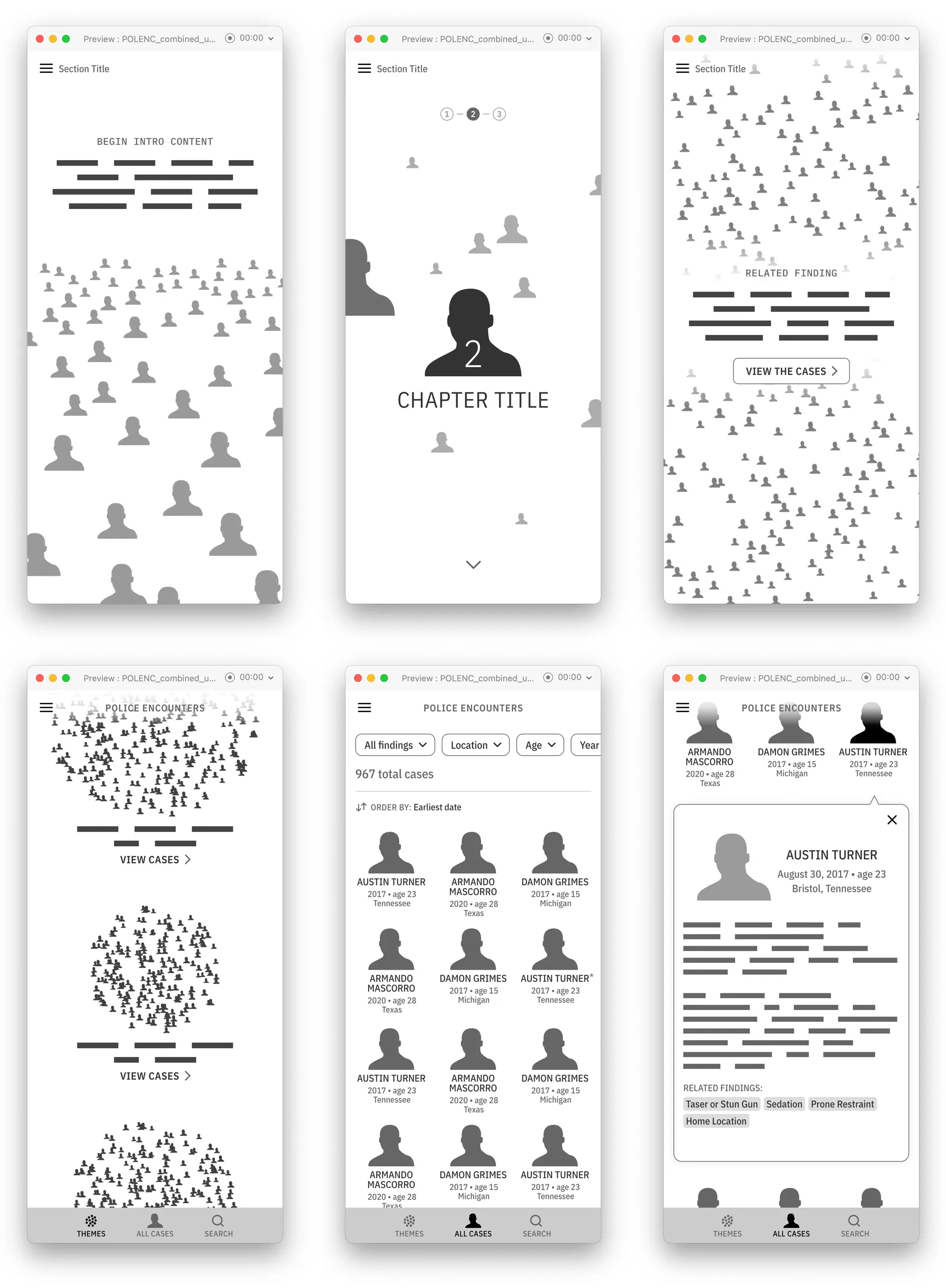
I created early experience sketches, wireframe prototypes and outlined the narrative structure.
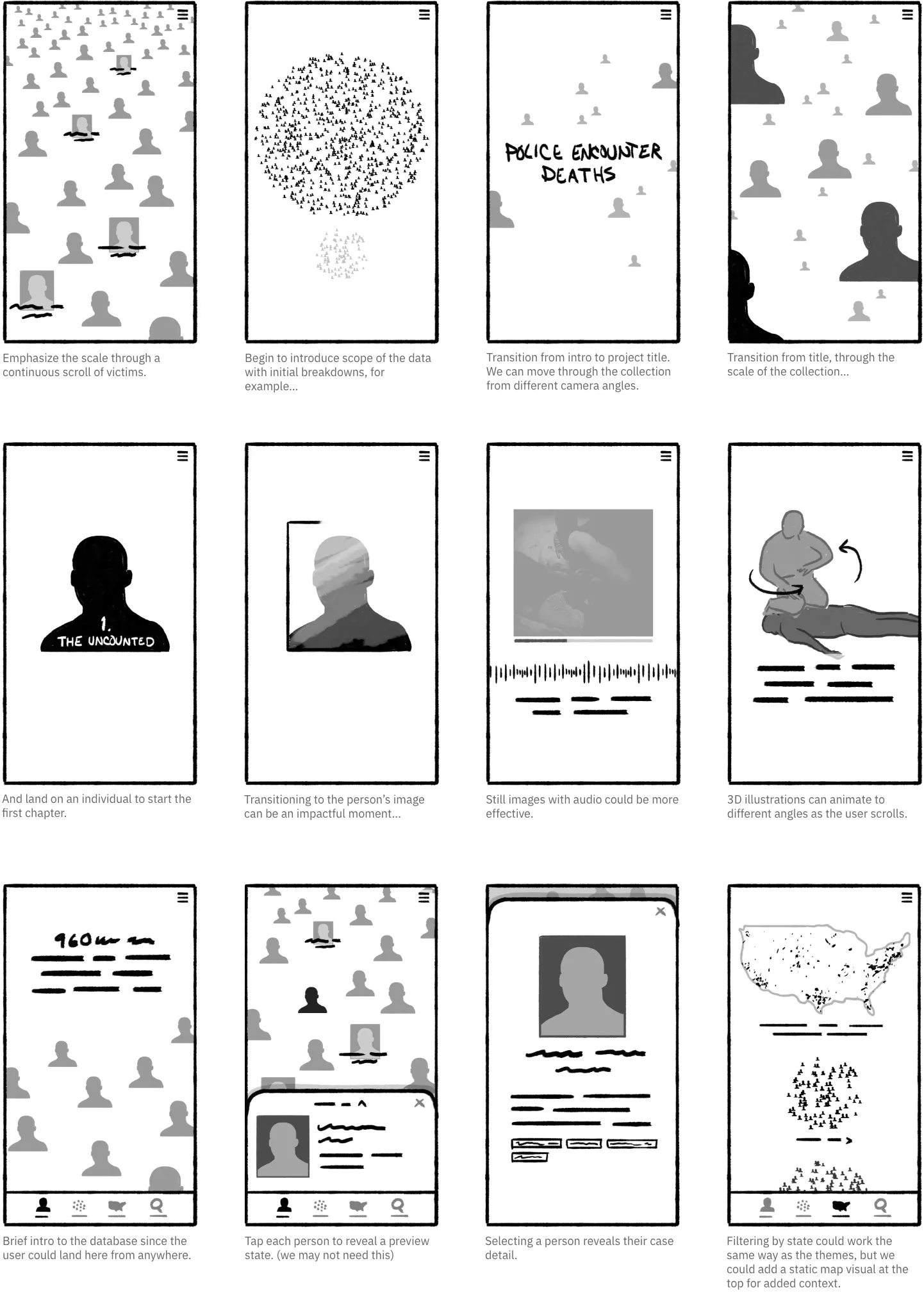
Grid of twelve hand-drawn mobile storyboard frames showing the planned flow from a scrolling crowd of silhouettes to chapter titles, audio and 3D illustration scenes and the case database, each with a short note.
Grayscale mobile prototype screens showing silhouette-based intro and chapter title screens, theme clusters with “View the Cases” links, a filterable case grid and a case detail panel.
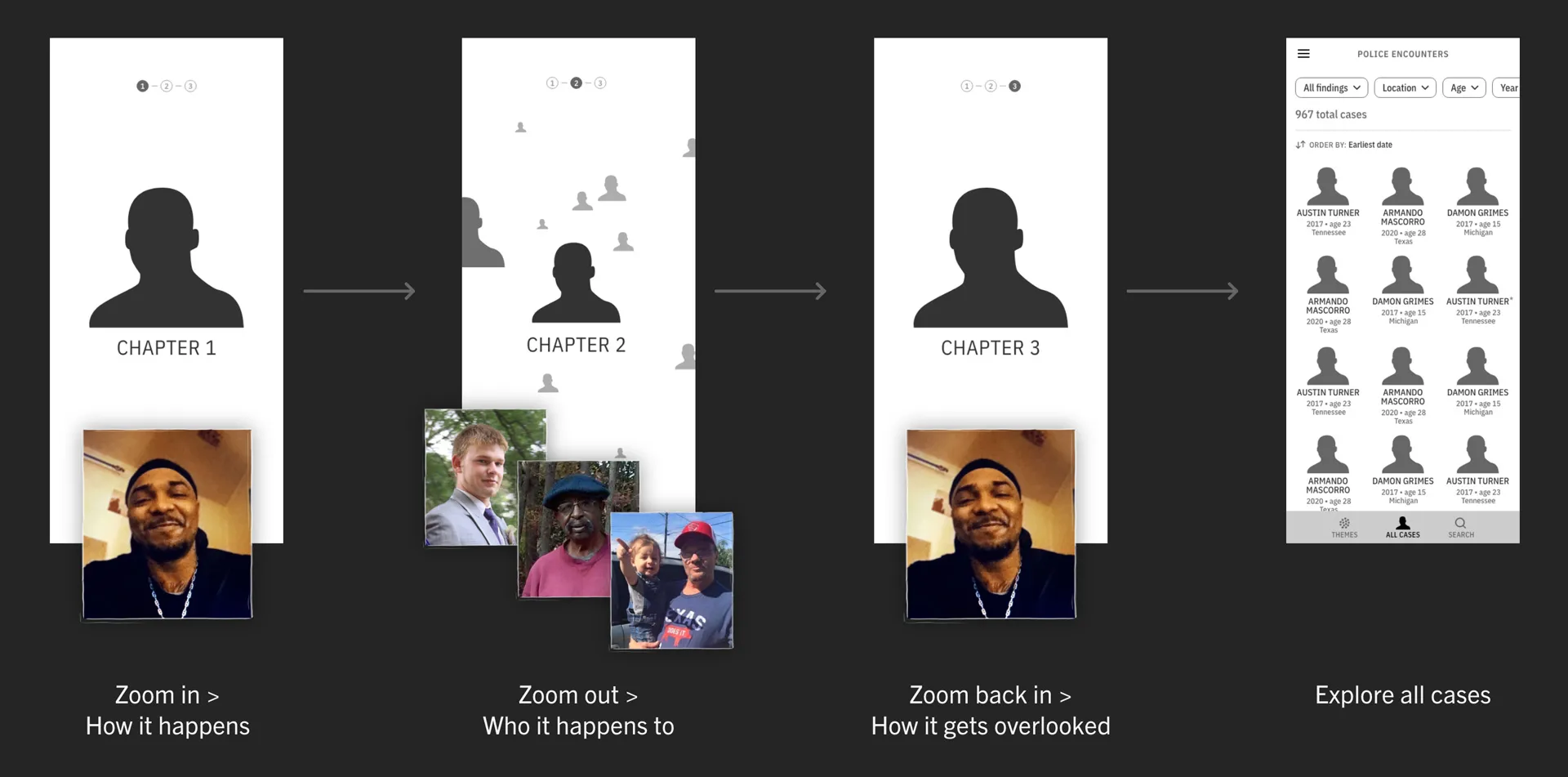
Diagram of the story structure showing three chapter screens and the case database connected by arrows, labeled “Zoom in: How it happens,” “Zoom out: Who it happens to,” “Zoom back in: How it gets overlooked” and “Explore all cases.”